
Indian Scientists conducted a study on high-performance catalysts
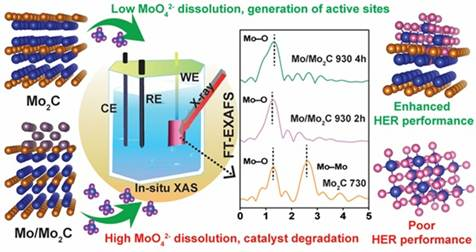
The research team, led by Dr. Neena S. John and PhD scholar Palash Jyoti Gogoi, found that molybdenum carbide (Mo©üC), a promising catalyst for the hydrogen evolution reaction, undergoes beneficial structural reconstruction during operation. Rather than degrading, the catalyst forms a stable and highly active surface layer that enhances both catalytic activity and long-term stability.
The study challenges the conventional assumption that catalysts remain unchanged while facilitating reactions. Researchers showed that the catalyst¡¯s true active phase emerges in situ under operating conditions, with controlled structural evolution playing a crucial role in improving performance. In contrast, related Mo/Mo©üC heterostructures experienced rapid oxidation and loss of activity, highlighting the importance of controlled reconstruction.
Published in the journal Material Horizons, the work establishes a fundamental link between atomic-scale structural changes, redox evolution and electrocatalytic efficiency. The findings offer valuable insights for developing next-generation catalysts capable of supporting scalable and affordable green hydrogen production.