
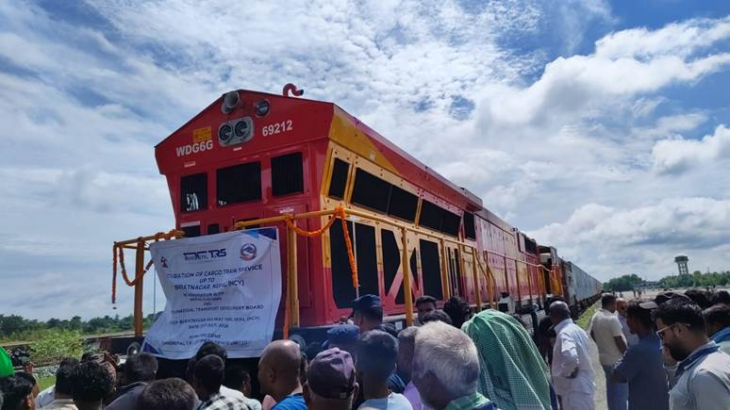
India’s First Direct Commercial Container Freight Train Reaches Nepal
The direct rail freight service marks a significant milestone in strengthening bilateral trade and enhancing supply chain efficiency. By enabling seamless movement of containerised cargo, the service is expected to reduce transit time, lower logistics costs and minimize dependence on road transport, thereby improving the overall ease of doing business for exporters and importers.
The train carried commercial container cargo directly from an Indian rail terminal to Nepal’s rail-linked inland cargo facility, eliminating multiple handling points and streamlining customs and freight operations. The initiative reflects the growing cooperation between India and Nepal in developing modern cross-border infrastructure and promoting efficient multimodal transport.
The launch of the service is expected to benefit a wide range of industries, including agriculture, manufacturing, consumer goods and industrial products, by ensuring reliable and timely delivery of cargo. Businesses on both sides of the border are likely to gain from improved connectivity, enhanced trade facilitation and reduced transportation costs.
The direct commercial container train also supports India’s broader vision of strengthening regional connectivity through modern railway infrastructure. Increased use of rail transport for freight movement is expected to reduce highway congestion, lower fuel consumption and contribute to reduced carbon emissions, making logistics operations more sustainable.
Officials believe the new rail service will encourage higher trade volumes, attract greater private sector participation in freight transportation and further deepen the long-standing economic partnership between India and Nepal. It is also expected to serve as a model for expanding cross-border rail freight services with other neighbouring countries.
The successful arrival of India’s first direct commercial container freight train in Nepal represents a new chapter in bilateral trade relations, reinforcing the commitment of both nations to building resilient, efficient and integrated transport networks that support economic growth and regional prosperity.